New insights from the inaugural Fiscal Leadership Circle—and an invitation to the next chapter of this work
Budgets, funding streams, cost allocation, claiming strategies—fiscal leadership can sound technical. But behind every fiscal decision is a more fundamental question:
The Fiscal Leadership Circle (FLC) was created to explore that question. The inaugural cohort brought together 14 fiscal leaders across 10 jurisdictions, collectively overseeing $4.3 billion in child welfare expenditures. Together, they explored how fiscal strategy can become a lever for prevention, family well-being, and systems change. What emerged was a broader picture of fiscal leadership—one that pairs technical expertise with vision, relationships, and a willingness to rethink how resources can work for families.
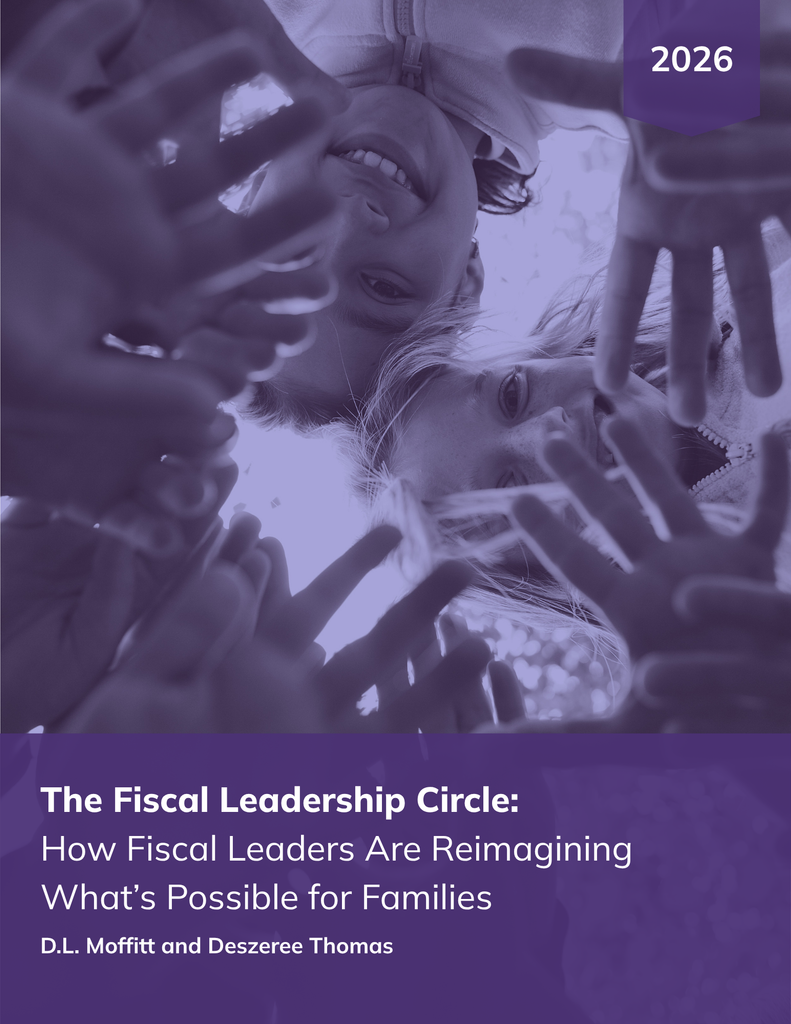
Now, our new report, The Fiscal Leadership Circle: How Fiscal Leaders Are Reimagining What’s Possible, captures some of what emerged from that first cohort—including five habits that are helping fiscal leaders think differently about how resources can support families.
The report explores how leaders are:
These fiscal habits aren’t meant to be a universal playbook. They’re emerging ideas from leaders working in different systems and contexts—and an invitation to consider what they might make possible in your own. The full report shares the stories, reflections, and examples behind these insights.
The questions at the heart of this work are only becoming more important.
Across the field, leaders are navigating constrained budgets, changing federal priorities, and the end of pandemic-era resources—while also looking for better ways to invest in the conditions that help children and families thrive. The challenge isn’t simply finding new funding. It’s understanding how existing resources, policies, partnerships, and systems can work together differently.
That can require both technical expertise and a willingness to rethink long-standing assumptions. It might mean looking more closely at how funding streams can be aligned, asking whether current measures capture what matters to families, or building the relationships needed to move resources across organizational boundaries. It can also mean recognizing that fiscal decisions are not just numbers on a spreadsheet—they shape what services are available, which ideas can grow, and what families experience when they seek support.
The Fiscal Leadership Circle: How Fiscal Leaders Are Reimagining What’s Possible offers a starting point for thinking about these possibilities. But the work is ongoing. The five habits are an evolving framework, not a finished formula, and each jurisdiction brings its own opportunities, constraints, relationships, and history.
So we’re continuing the conversation.
How can we use the resources we already have differently? Where are the opportunities to align funding across systems? What would it take to invest more intentionally in family and community strengths? And who needs to be part of those conversations?
Those are the kinds of questions the Fiscal Leadership Circle is designed to explore together.
FLC is bringing together another group of fiscal and program leaders who want to explore how resources can be used differently to better support children and families.. The experience is grounded in peer learning, practical exploration, and honest conversations about the real fiscal and systems challenges leaders are navigating.
We’re hosting a virtual information session for the third FLC cohort on September 29 from 1–2 p.m. ET. We’ll share more about the experience, who might apply, the application and selection process, and what’s ahead—with plenty of time for questions.
Changing systems takes technical expertise. It also takes relationships, curiosity, and a willingness to imagine that resources might work differently than they do today.
We’re looking forward to continuing that learning together.